Стремимся к совершенству. Выполняем каждое обязательство.
Команда Эрагона

An industrial wastewater treatment system can meet its design specifications during commissioning and still become difficult to operate later. Changes in production, wastewater quality, membrane performance, energy consumption, and maintenance requirements can all affect long-term results.
For manufacturers, a reliable wastewater treatment system is therefore not simply one that has enough capacity. It is a system designed around actual operating conditions and able to maintain stable performance over time.
Reliability Starts With the Process, Not Individual Equipment
A common mistake in industrial wastewater treatment is to evaluate reliability by looking at individual equipment alone.
A high-quality membrane, evaporator, or filtration unit cannot compensate for an unsuitable process configuration. Reliable systems need the different treatment stages to work together, from pretreatment and membrane concentration to final treatment and water reuse.
Pretreatment is particularly important. Removing suspended solids, oil, scaling-forming substances, and other contaminants before downstream processes can reduce fouling and help maintain stable operation.
The same principle applies to high-salinity and Zero Liquid Discharge (ZLD) systems. The balance between membrane concentration and evaporation is often more important than the performance of either unit individually.
Water Balance and Operating Cost Matter
A treatment system may achieve high water recovery on paper but still be difficult to operate if the overall water balance is not properly designed.
This becomes more challenging when wastewater is concentrated through multiple membrane stages before entering evaporation or crystallization. The feed volume, concentration level, evaporation load, recovered water, and final concentrate all need to remain compatible throughout operation.
Operating cost is another part of reliability. Excessive chemical consumption, high energy demand, frequent membrane cleaning, or unstable evaporation can make a technically successful system difficult to maintain in practice.
For high-salinity applications, technologies such as MVR evaporation can help reduce the thermal load and support water recovery, but their performance still depends on the upstream process design.
Project Experience: Designing for Long-Term Operation
In one industrial park, wastewater generated from production could not be directly discharged due to local environmental requirements. Instead, the treated water had to be fully reused in the production process.
The customer had previously operated a Zero Liquid Discharge (ZLD) system, but maintaining a practical water balance between the membrane concentration stage and evaporation system remained challenging. Operating costs were also a major concern.
After reviewing the project conditions, ERAGON proposed an integrated process combining segregated wastewater pretreatment, multi-stage MMS membrane concentration, and evaporation crystallization. Following several rounds of technical discussions, the customer selected ERAGON to deliver the treatment system.
The project was completed in 2022 and has remained in stable operation for four years. According to the project's operating experience, actual operating costs have been more than 30% lower than the customer's original budget, and the system's stability and cost performance have been well recognized by the customer.
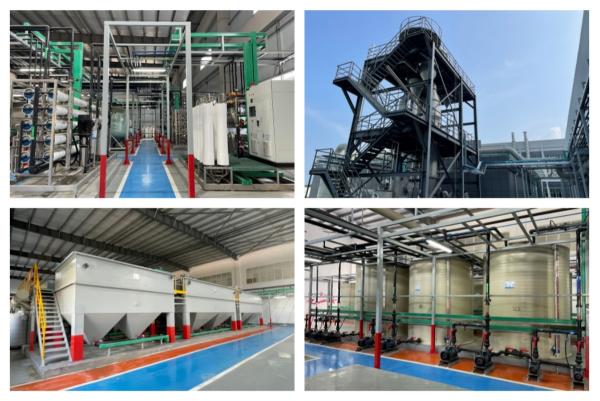
The success of the project also led to a new opportunity from another development phase of the same industrial park, where ERAGON was approached again for wastewater treatment support.
This type of long-term project experience provides an important lesson: system reliability is ultimately demonstrated through operation, not only through design calculations or equipment specifications.
What Should Be Considered Before Choosing a System?
When evaluating an industrial wastewater treatment system, manufacturers should look beyond nominal capacity and initial equipment cost.
Important questions include:
For complex wastewater, these considerations can be more important than selecting the most advanced individual technology.
Reliability Is a System-Level Result
A reliable industrial wastewater treatment system is the result of appropriate process selection, stable pretreatment, effective integration between treatment stages, practical water balance, and consideration of long-term operating costs.
For manufacturers planning wastewater reuse or ZLD, the goal should not simply be to achieve the highest possible recovery rate. The better question is whether the system can maintain the required performance under real production conditions.
ERAGON provides engineered solutions for industrial wastewater treatment, water reuse, high-salinity wastewater, and ZLD applications, with process design based on wastewater characteristics and long-term operating requirements.
Explore our Industrial Wastewater Treatment Solutions for Factories.
For ZLD projects involving membrane concentration and evaporation, see our MVR Evaporation System.





Оставить сообщение
Отсканируйте QR-код для отправки в WeChat :

Отсканируйте в WhatsApp :